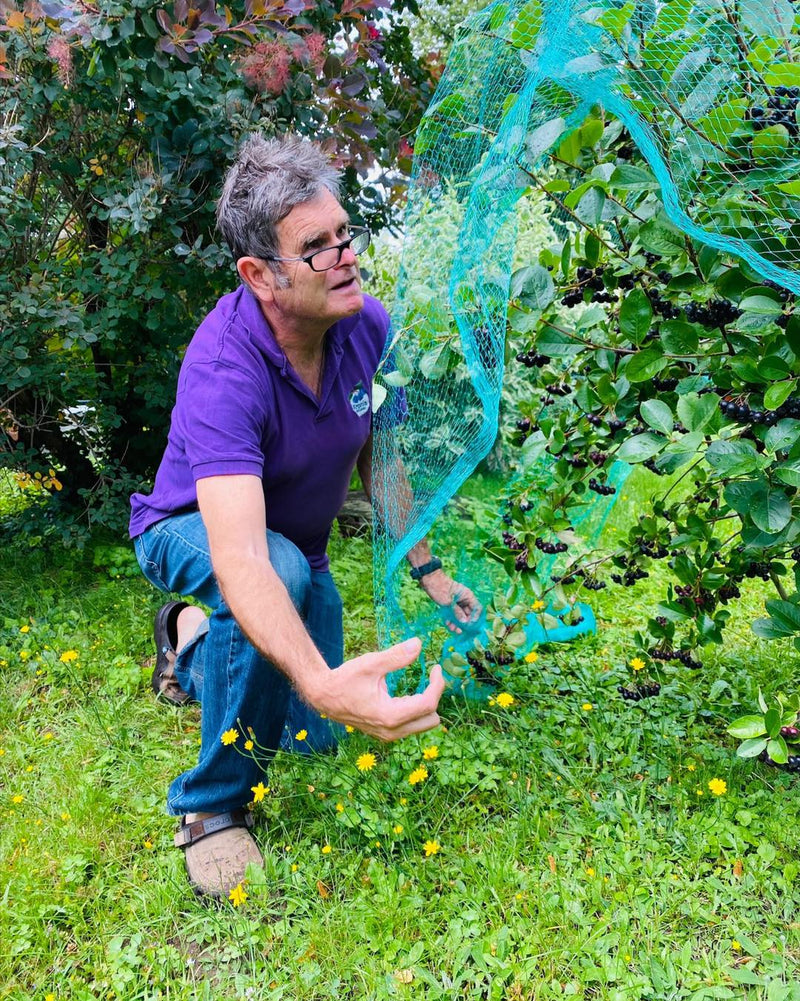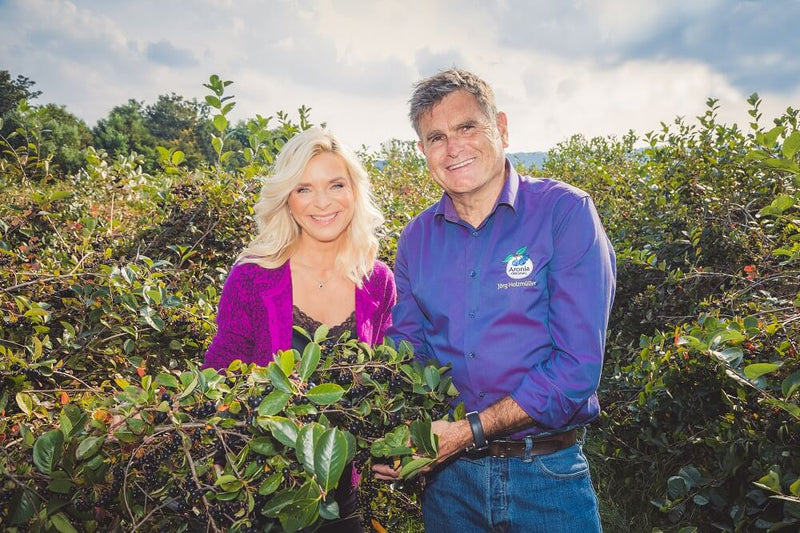

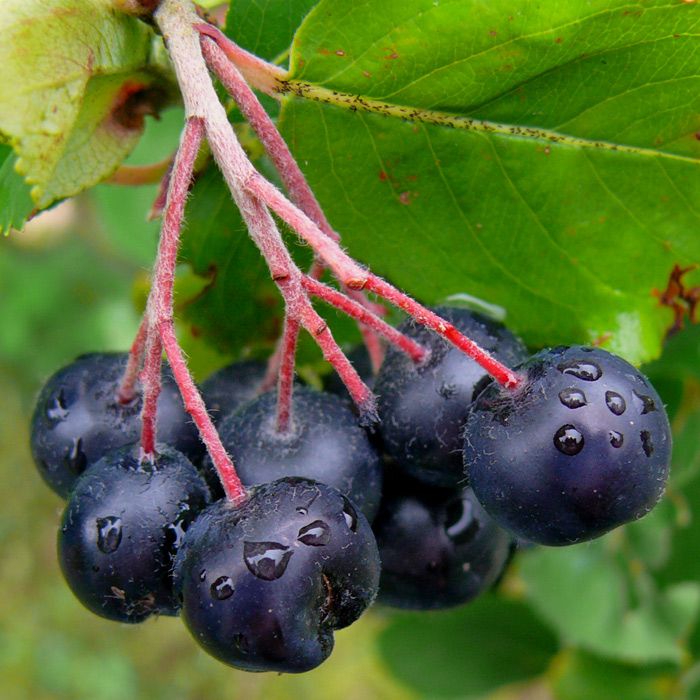
You can grow the small, hardy aronia berries as a shrub in your own garden or on your balcony. This way, you’ll have a fresh supply of aronia berries every year. Aronia plants are resistant to pests and fungi and can withstand frost down to minus 35 degrees Celsius.
Our online plant shop at www.aronia-original.de offers the Aronia Nero Superberry. This is a special cultivar for fruit growing, promising a particularly rich harvest and large berries.
Our Aronia ORIGINAL plant experts have compiled the 5 most important tips for growing aronia at home:
1. When is the best time to plant aronia shrubs?
The mild autumn gives us a long planting season for aronia. As long as there is no ground frost, the hardy aronia plants can be planted in your garden. Ideal planting periods are in spring, from March to the end of April, and in autumn, from September to early December. Don’t forget to water after planting!
2. Potted or bare-root?
On our plant page, you can choose between potted aronia shrubs and so-called bare-root plants. Potted plants, as the name suggests, are delivered with well-developed roots in a pot. These are 3-year-old young plants that will produce flowers and, shortly after, the first berries the following year. Bare-root plants, on the other hand, are shipped well-packaged but with loose root balls, without a pot. They are about 2 years old. This means the first harvest can only take place the year after next. As a rule, aronia plants only start bearing berries from the fourth year. The long root branches of bare-root aronia plants should also be pruned before planting. This encourages new growth.
Conclusion:
If you want to harvest your own aronia berries as quickly as possible, we recommend buying a potted shrub. If you’re planning your own small aronia plantation with 10 or more plants (and have a little more patience until the first harvest), we recommend bare-root plants.
3. What does the ideal location for aronia plants look like?
Even though aronia shrubs are quite undemanding: almost every berry plant likes a bit of sun. The more sun your aronia plant gets, the more fruit it can produce and the fuller the berries will taste.
When it comes to soil conditions, aronia is also very modest. Only waterlogging and pure clay soils should be avoided. However, regular watering, especially in high summer, is good for your aronia plant.
By the way, aronia shrubs are shallow-rooted. This means their roots are close to the surface. Please bear this in mind if you need to dig around your aronia plants.
4. Does the aronia plant need to be fertilised?
Our Aronia ORIGINAL plant experts say clearly: “Fertilise only if necessary!” If the aronia is growing in a balanced mixed soil, fertilising is hardly necessary. However, if the soil is particularly low in nutrients, e.g. sandy soil, fertilising can be beneficial. Please use natural, organic fertilisers. Incorporating fresh humus into the soil can also positively influence nutrient supply.
5. How often should the aronia shrub be pruned?
An old rule says: the more the shrub is pruned, the more the plant will grow. To achieve full growth of the aronia plant, we recommend a so-called formative pruning in the first and second year. This involves removing any shoots that are too close together. The cuts should be made slightly diagonally above the bud. This promotes branching and multi-shoot development.