35,49 €7,10 €/l
Knowledge · What is aronia?
What is aronia? The aronia berry at a glance
so small and yet so powerful!
Small, deep violet and pleasantly tart: The aronia berry is one of Europe's most distinctive berries. Here you can find out how it tastes, where it comes from, and what you can make with it.
The taste
What do aronia berries actually taste like?
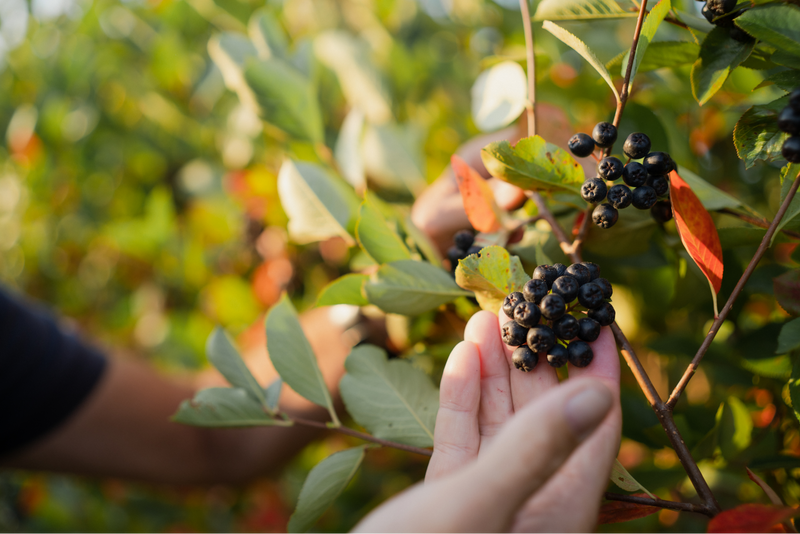
Aronia berries taste fine-tart and sour, whether fresh, dried, or as juice. Their intense, deep violet color is striking: even when diluted with water to make a spritzer, aronia juice remains deep red. This is due to natural plant pigments from the polyphenol group.
Tart
distinctive
Sweetness
subtle
Color intensity
deep violet
Fancy some aronia?
Not-from-concentrate juices, dried berries, fruit spreads and more from controlled organic cultivation.
Origin & history
Origin and history of the aronia berry
Origin
Eastern North America
Wild aronia bushes thrive on the current border between Canada and the USA. Even the indigenous peoples valued the dark berries, among other things as winter provisions.
from 1890
Michurin cultivates aronia
The Russian botanist Ivan V. Michurin (1855–1935) breeds large-fruited varieties, robust enough for harsh, cold regions. The first cultivation areas emerge in the Soviet Union.
1970s
From Eastern Europe to the GDR
The dark berries are initially used as a natural plant dye for the food industry.
1989
After the fall of the Berlin Wall
Cultivation areas and interest in the tart-sour fruit initially decline.
2000s
From dye berry to food
Also thanks to Aronia ORIGINAL: As juice, dried fruit, powder, jam and more, the berry regains importance.
Today
Cultivation is growing again
Larger areas in Germany, Poland, Austria, Italy, and Switzerland. And demand continues to rise.

The Russian botanist and plant breeder cultivated aronia in Eastern Europe.
Location
From North America to Europe and Siberia, it thrives in lowlands and mountains. The sunnier the location, the sweeter the berries.
Resilience
Hardy, undemanding, and resistant to diseases. Winter-hardy down to −35 °C, but it dislikes waterlogging.
Flowers & Fruit
In May, it bears white flowers. Its relation to the apple is unmistakable. From August, the berries ripen in corymbs. Birds and deer also enjoy them.
Good to know
One berry, many names
Because it looks very similar to the rowan, it is sometimes called "black rowan". More accurately, it is "black chokeberry": Like the apple, aronia belongs to the rose family. When cut open, it even reveals a small core, much like a mini-apple.
EnglishBlack aronia berry
DutchAppelbes
PolishAronia czarna
RussianRjabina chernoplodnaja
BulgarianChernoplodnaja skorusha
FinnishAroniat
LithuanianAronija
RomanianScorus cu fructe negre
What can you do with aronia?
Fresh berries are cooked into jam or juice or dried. During harvest season from August to September, they are a treat fresh in muesli, yogurt, or cake. And year-round: Whether pure, in smoothies, baking, or cooking, aronia berries bring more than just color to the plate.
Recipes with aronia berries
Classic Hildaplätzchen, filled with aronia jam and aronia fruit spread from Aronia ORIGINAL. 20 minutes preparation, 15 minutes baking time.
To the recipe →
Recipes with aronia berries
Pesto made from organic aronia berry powder, pine nuts and olive oil on whole-grain spaghetti, with cherry tomatoes. For 2 people, 30 minutes from start to table.
To the recipe →
Recipes with aronia berries
Leaf salad with a dressing made from aronia not-from-concentrate juice, dried aronia berries, almond butter and linseed oil, plus chopped walnuts. Serves 2, ready in 10 minutes.
To the recipe →Feeling hungry?
Direct from the aronia specialist in the Dresden area, in Organic quality.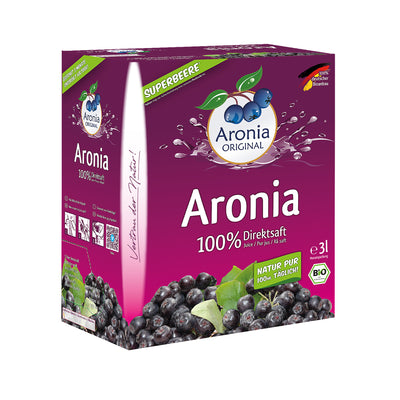
23,99 €8,00 €/l
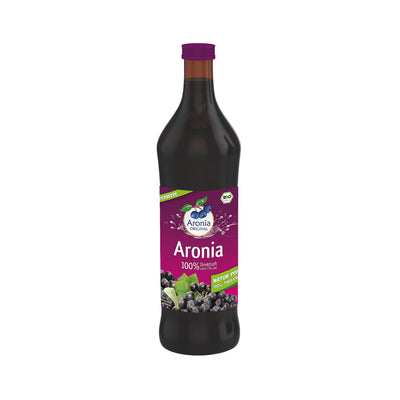
6,99 €9,99 €/l
We are here for you