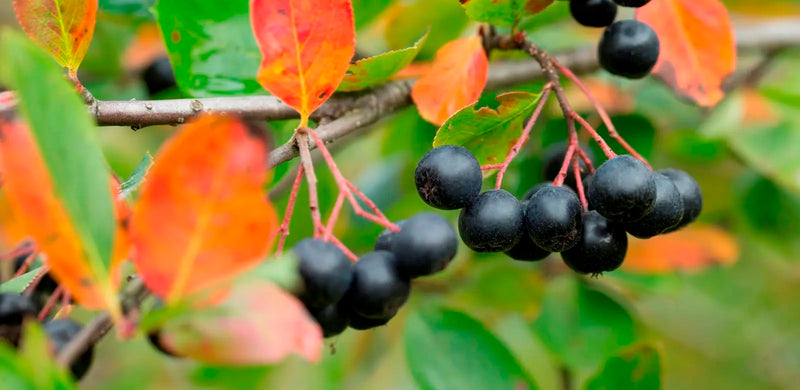

Are the leaves of your aronia plant slowly turning red and the berries taking on a black color? This indicates that the harvest time is approaching. At the beginning of August, we recommend picking the first pitch-black aronia berry, cutting it in half, and checking if the flesh is completely black-dark violet.
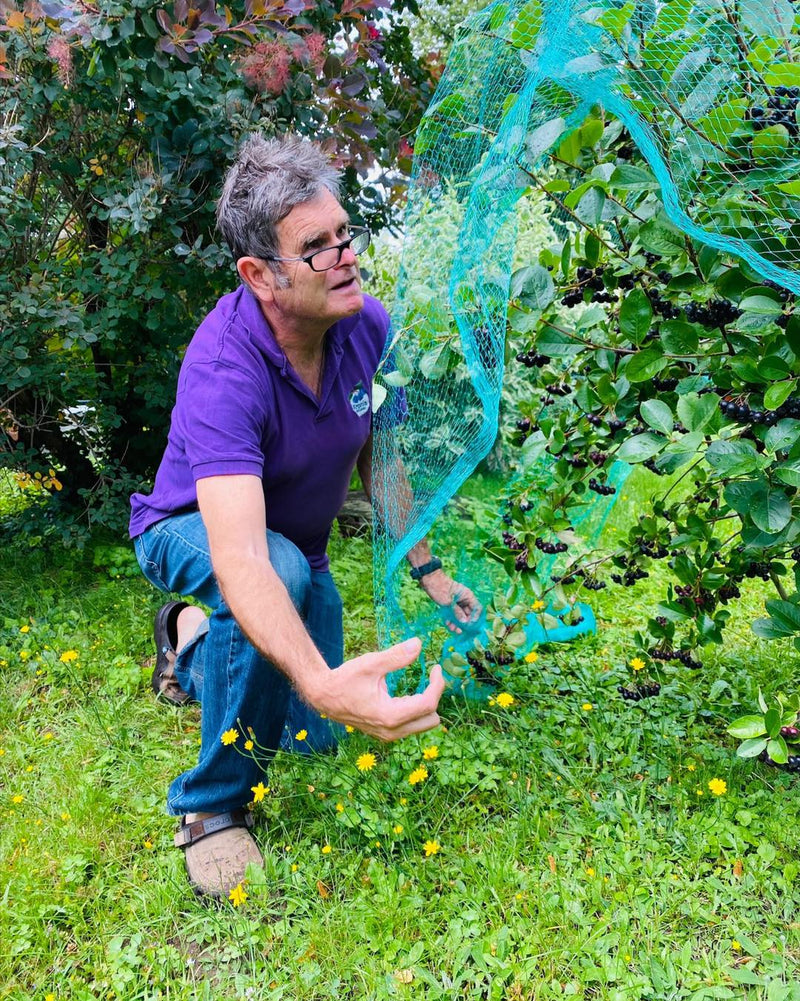
Please remember to protect your plant with a ground-length bird net until the final berry harvest, as blackbirds and others may be faster than you. After the very first harvest, it is important to prune the plant to encourage growth. Later, pruning will require less effort as the plants will exhibit steady and calm growth.
For those of you who have not yet planted an aronia bush in your garden but are interested in doing so, here are some valuable tips from us:
When purchasing, first choose one of the three aronia plants (Aronia Nero Superberry, Aronia Aron, or Aronia Wildsorte). The original form of the chokeberry, with its intensely flavored fruits, is the Aronia Wildsorte, which is excellent for wild hedges due to its branching.
However, Aronia Nero Superberry yields the highest harvest. It also has greater resistance to frost and heat and is more resistant to fungal or bacterial pathogens as well as diseases and pests in general.
Aron is a newer Danish cultivar, remarkably resistant to wind and salty air. However, waterlogged soils are not recommended for this plant.
Additionally, you can choose between a bare-root plant and a potted plant, with the planting time being crucial. The potted, well-rooted plants are 3 years old when shipped and can wait a little after receipt due to the pot's protection.
In contrast, bare-root, 2-year-old plants can only be ordered during optimal planting periods, as they must be planted immediately upon receipt. The ideal planting times are between March and May and between September and December, as long as there is no ground frost. It is best to choose a sunny location and use a mixed soil of sand and clay. Alternatively, you can enrich the soil with some humus for a more abundant yield. Of course, the yield will ultimately vary depending on sunlight hours and plant type, but all 3 varieties produce many berries, so you can look forward to your predictable harvest around this time next year.
Journal
Aronia plants will soon bear ripe aronia berries
Are the leaves of your aronia plant slowly turning red and the berries taking on a black color? This indicates that the harvest time is approaching. At the beginning of August, we recommend picking the first pitch-black aronia berry, cutting...