
16,95 €
Sold out
1 Product
Sort
No products match the selected filters.
Bring aronia to your own garden or balcony!
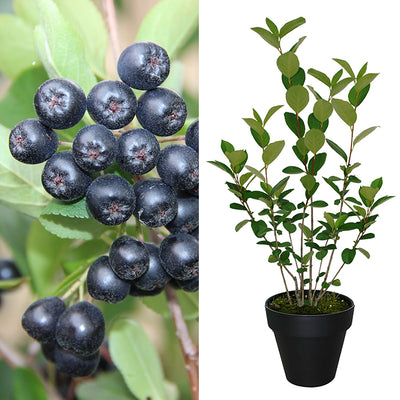
With the Aronia Nero Superberry, we offer you a true classic. This variety is specially selected for fruit cultivation. With the leaf emergence, the first buds, and the delicate white flowers in May, as well as the colorful foliage in autumn, the aronia plant is a real eye-catcher. Its fruits ripen in August/September. Dark violet, plump, and firm, they are ideal for further processing. They are slightly larger compared to the berries of other aronia varieties, particularly tasty, and aromatic.
Robust aronia beauty all year round
Whether in the garden, as a container plant on the balcony, or the terrace: aronia bushes thrive excellently in our North European climates. They cope very well with warm summers and bitterly cold winters. "Since the plant produces secondary plant compounds for its own protection, it is both robust against pests and fungi and frost-resistant down to minus 35 degrees Celsius," explains Jörg Holzmüller, Managing Director of Aronia ORIGINAL Naturprodukte GmbH.
In spring, the gardener is greeted by full, white flower clusters, and in late summer, from around August, the aronia bush rewards you with a rich harvest of juicy aronia berries. These can then be processed into numerous delicacies: whether juice, jam, sauces, or cakes, the creativity knows no bounds, and when it comes from your own garden, it tastes twice as good. The tart, sour aronia berries also taste wonderful when eaten directly from the bush. In autumn, the fiery red leaves of the bush are a beautiful sight.
Aronia plant tips from the expert
Even though the aronia plant is one of the less demanding berry plants, it still appreciates a sunny location. This allows more fruit sugar to be formed in the berries. As for soil quality, the plant is also very adaptable: apart from pure sandy and clay soils, aronia thrives almost everywhere. When planting, it should only be ensured that the soil is frost-free and not too moist. By the way, as a self-pollinating plant, aronia bears fruit from the fourth year. These are usually ripe from the end of August and can be harvested.
Via our plant advice you can access the plant FAQ.
- Location: Sunny
- Soil: Mixed soils of sand and clay
- Planting time: March to May or September to December
- Preparation: Loosen the soil and remove weeds. If needed, work in organic fertilizers (horn meal, compost, or manure). Bare-root aronia: trim root tips, shorten shoots to 2/3 of the height. Leave the central shoot longer as a leader. Potted plant: water thoroughly.
- Fertilization: Organic fertilizer (horn meal, compost, or manure).
- Care & Harvest: Rejuvenation: remove individual shoots. Formative pruning (1st and 2nd year): remove crossing and congested shoots. A strong cut leads to vigorous growth. Aronia is a self-fertile plant and bears fruit from the 2nd year. Ripe berries can be harvested from the end of August/beginning of September.
Valuable articles about aronia plants
If you would like to learn more about growing, caring for, and the diverse uses of the aronia plant, visit our blog. There you will find numerous tips and interesting information about this versatile plant.
Recipes with aronia
Ideas from our recipe collection, from savoury to sweet
Recipes with aronia berries
Classic Hildaplätzchen, filled with aronia jam and aronia fruit spread from Aronia ORIGINAL. 20 minutes preparation, 15 minutes baking time.
To the recipe →
Recipes with aronia berries
Pesto made from organic aronia berry powder, pine nuts and olive oil on whole-grain spaghetti, with cherry tomatoes. For 2 people, 30 minutes from start to table.
To the recipe →
Recipes with aronia berries
Leaf salad with a dressing made from aronia not-from-concentrate juice, dried aronia berries, almond butter and linseed oil, plus chopped walnuts. Serves 2, ready in 10 minutes.
To the recipe →